Pressure Sensitive Labels
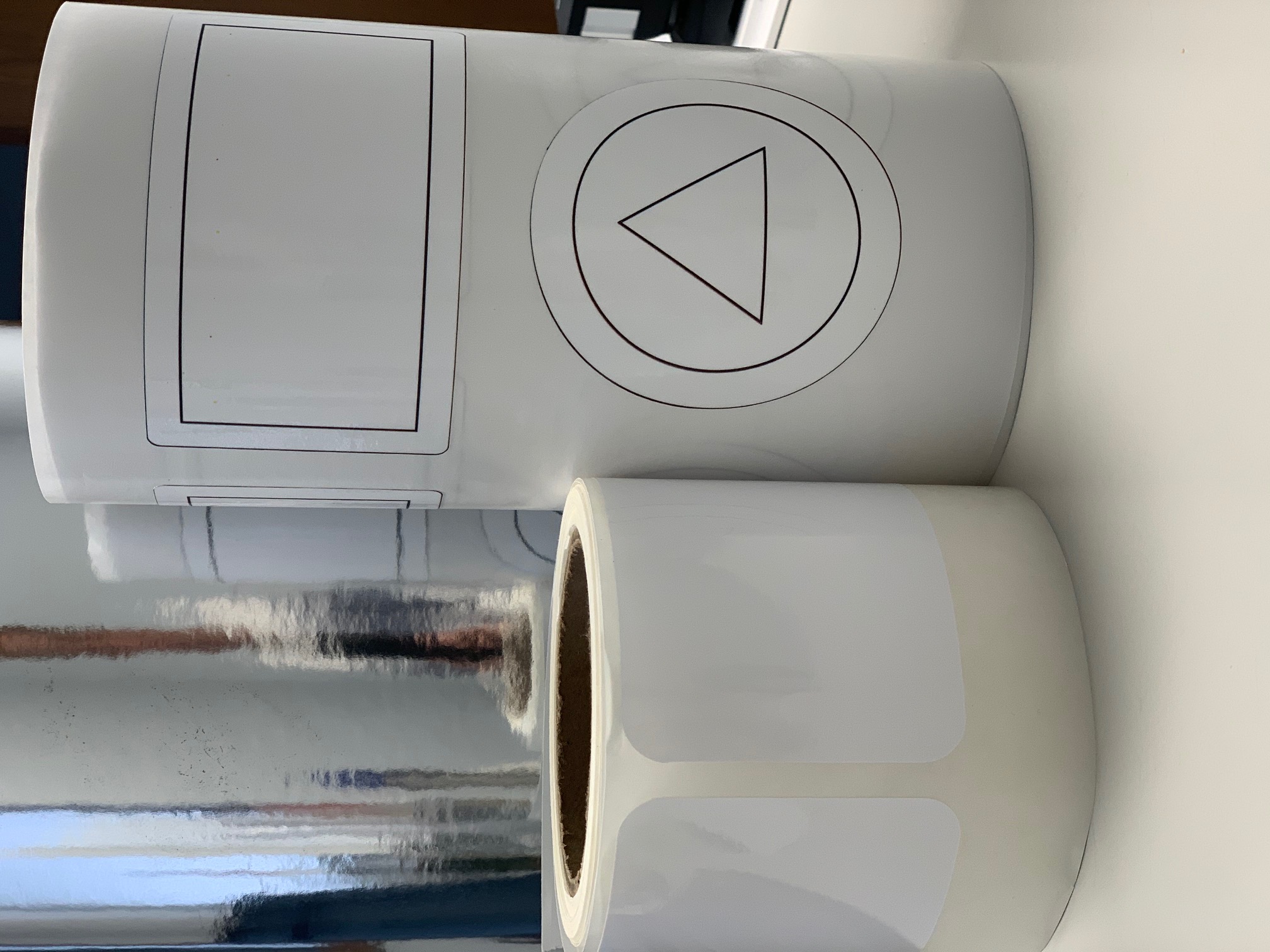
Pressure sensitive labels (PS labels) are the most widely used type of printed labels in manufacturing today. These self-adhesive labels work through a pressure-activated adhesive system—no heat, water, or solvents required. They're ideal for both automated applicator lines and hand application. By industry estimates, pressure sensitive labels make up roughly 80% of the global label market.
As a pressure sensitive label manufacturer, Midwest Label Supply works with OEMs, contract packagers, and product companies who need precision labels that perform. We print on short-run and long-run quantities with variable data capabilities. Our experience spans specialty inks, industrial adhesives, and substrates including paper, film, foil, and synthetic materials. The adhesive layer bonds instantly under light pressure from a labeling machine or by hand—peel from the liner and apply.
What are Pressure Sensitive Labels used for?
Custom pressure sensitive labels are most commonly thought of when manufacturers are considering how the label will be applied to the packaging of a product. Often times pressure sensitive labels will be applied to the packaging through an automated or semi-automated process. Such as a cylindrical beer or soda can or bottle label applicator. You will find pressure sensitive labels on a broad variety of products. At MLS custom pressure sensitive labels are manufactured for wine labels, cosmetic labels, medical labels, beer labels and more.
Variable Pressure Sensitive Labels
Midwest Label Supply can print serialized and variable custom data on your next label. Types of codes we can produce include QR codes, data matrix codes, bar codes, and warehouse SKU labels. Just provide us with an excel, CSV or txt file and we can input the data into labels. We are able to do short-run or long-run applications.
Custom Pressure Sensitive Labels
Midwest Label Supply offers print on demand custom pressure sensitive label printing. We are able to do short-run or long-run applications. We can also do variable printing for batch or 1 labels or mass customization applications (e.g. Give someone a Coke campaign). We can add laminates which protect labels from moisture or add tactile touch and feel. The sizes vary from 10mm x 10mm to 1200mm x 2000mm sheet sizes and 10mm to 1000mm discs diameters.
Pressure Sensitive Label Finishing
Along with providing a vast array of printing options for custom pressure sensitive labels, we also can do a variety of unique custom finishing options. Some examples include die cutting such as the Coors Mountain label. We can provide overlaminate for UV protection, limiting abrasion and moisture protection. Lastly we can slit the labels onto roll sizes that fit your custom needs. As a contract print manufacturer we do not store off-the-shelf PS labels, instead our labels are made to order.
Pressure Sensitive Food and Beverage Labels
You'll see our custom pressure-sensitive labels on an expansive scope of items from food and beverage to industrial equipment to cold wet ice cream shelves. Our specialty is low volume specialty products. We have a fine eye for the print craft and we hope our customers do as well. We work with a variety of specialty products that need to stand out on the shelves.
Below is a video of our die cutting, splicing and roll-to-roll finishing at work:
Pressure Sensitive Adhesive Technology
The "pressure sensitive" part comes from the adhesive layer itself. Unlike traditional adhesives that need heat activation or curing time, PS adhesives form an immediate bond through van der Waals forces when pressure is applied. We work with three main adhesive chemistries:
- Acrylic adhesives — UV stable, good chemical resistance, ideal for outdoor and industrial labels
- Rubber-based adhesives — High initial tack, good for rough surfaces and cold temperature application
- Silicone adhesives — Extreme temperature range (-65°F to 500°F), used in aerospace and specialty applications
Each adhesive can be formulated as permanent, removable, or repositionable depending on your application requirements.
Custom Pressure Sensitive Options
We print on over 50 substrate options spanning paper, film, and foil categories with matching adhesive and laminate configurations.
Face Stock
Face stock options include matte paper, gloss paper, semi-gloss, vinyl, BOPP (biaxially oriented polypropylene), polyester, foil, and specialty films. Different substrates offer different performance characteristics—vinyl for durability, BOPP for moisture resistance, polyester for chemical exposure.
Adhesive Selection
Adhesive selection matters. Cold or wet environments need aggressive adhesives with high initial tack. Removable applications need clean-release formulations. Food contact applications require FDA-compliant adhesives. We'll match the adhesive to your substrate, surface energy, and environmental conditions.
Finishing
Finishing options include precision die-cutting, matte and gloss laminations for UV protection, and custom slitting to match your applicator specifications. We can slit to any core size and roll diameter your equipment requires.
How Pressure Sensitive Labels Are Applied
One of the reasons PS labels dominate the market is the flexibility of application. You don't need specialized equipment, heat tunnels, or glue applicators. For smaller operations, labels go on by hand. Peel from the liner, position, press. Done. For higher-volume production lines, automatic label applicators feed labels from the roll and apply them at speeds up to several hundred containers per minute.
We work with customers on both ends of this spectrum. A small hot sauce company hand-applying labels in their kitchen gets the same print quality as the contract packager running an automated line. The difference is in how we slit and wind the finished rolls. Hand-apply labels typically go on sheets or loosely wound rolls. Machine-apply labels need specific core sizes, roll diameters, and wind directions to feed properly through the applicator. We'll configure the finished rolls to match whatever your equipment needs.
Pressure Sensitive Labels for Regulated Industries
Some of our most interesting work involves labels for regulated industries where the wrong material choice or adhesive failure isn't just inconvenient, it's a compliance issue. Medical device labels need to withstand sterilization processes. Pharmaceutical labels require tamper-evident features and specific adhesive performance over the product's shelf life. Chemical labels need GHS compliance and resistance to the very chemicals described on the label.
We've built our material library around these requirements. When a client comes to us with a challenging application, whether it's a label that needs to survive autoclave sterilization, adhere to a cold or wet surface, or remain legible after years of UV exposure, we can usually pull from our existing substrate and adhesive combinations to find something that works. When we can't, we'll work with our material suppliers to spec something custom for the application.
Pressure Sensitive vs Other Label Types
PS labels aren't the only option out there. Depending on your application, you might also consider shrink sleeves for full 360-degree coverage, cut and stack labels applied with wet glue, or in-mold labels that become part of the container itself. Each has its place. But for most applications, pressure sensitive labels win on versatility, cost, and ease of use.
Shrink sleeves are great when you need full-body coverage or tamper evidence, but they require heat tunnels and specific container shapes. Wet glue labels are common in high-speed beverage lines but need specialized applicators. In-mold labels are permanent but require the label to be part of the molding process. PS labels, on the other hand, work with virtually any container shape, can be applied with minimal equipment, and offer the widest range of material and finish options. For the majority of our customers, PS labels are the right fit.
Getting Started with Pressure Sensitive Labels
If you're looking for a pressure sensitive label manufacturer who actually picks up the phone and talks through your project, that's us. We're a small Milwaukee-based operation where the owner is also the engineer and operator. We know our equipment, we know our materials, and we're not going to send you to a call center when you have a question about adhesive performance on your specific substrate.
Here's what we need to get you a quote:
- Label dimensions (or the container dimensions and we'll figure it out)
- Material preference if you have one (or describe the application and we'll recommend)
- Quantity range you're looking at
- Any special requirements (variable data, outdoor durability, FDA contact, removable adhesive, etc.)
- Artwork files if you have them, or let our design team help
We'll get back to you with a quote and typically have samples available if you want to test the material before committing to a full run. Most orders ship within a few days of artwork approval. No minimums, no plate charges, no surprises.
Related Label Services
- Short Run Labels - Perfect for testing new products or limited edition runs
- Variable Data Labels - Serialized codes, unique QR codes, and personalized printing
- QR Code Labels - Serialized QR codes for tracking and engagement
- Custom Die Cutting - Non-standard shapes and precision cutting
- Cold Foil Stamping - Metallic finishes for premium labels